#WorldsFair12

Today I went to the morning portion of a symposium about The Woman’s Building Library at the 1893 World’s Fair. There was so much incredible work shared, and I tweeted it on my feed. Hopefully the afternoon portion will be tweeted by other attendees too! Here is the link to the Twitter search I did for it (I don’t think I can build Twapper Keeper archives any more without upgrading my Hootsuite account), and I’m still searching for comparable alternatives (suggestions welcome!)

I’d love to hear your thoughts about the talks or any resources you would like to share about the World’s Fair. For those still at the symposium,  I’ve been using #WorldsFair12 to mark my tweets on the subject.


Fun Infographics

It’s been a while since I’ve posted on here, but trust me, it’s been because I’ve been doing some really cool research that I can’t wait to post about once it’s farther along!

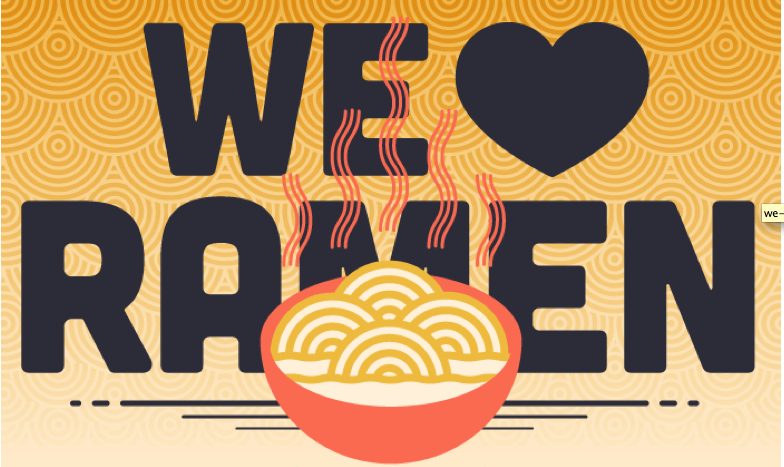
Anyhow, I got an e-mail from a man named Peter a little while back about his infographic, and I just got a chance to give it a look today. It’s all about ramen, and I thought you all would like to see it too. I think the layout is fun, and I love to learn the history of things we tend to take for granted. It’s been a few years since I’ve eaten ramen, but there was a time when all I ate was stuff from the food bank, supplemented by ramen. I know a lot of us in libraryland run across infographics all the time, so I thought I would use this as a chance to open up a discussion about them too: what makes a good infographic (or a not-so-good one)? Do you find the content or the design of the graphic more heavily influences your opinion?

Here is the link to Peter’s ramen infographic (the whole thing is a little big to fit here, but I’ve dropped a screen shot of the title area below to entice you). I personally think it’s pretty good, but I am curious to hear what other folks think as well.

LIS Professionals and Big-Time Publishers: Do We Speak Out?

This morning I read a great post by Inger Mewburn called The academic writers’ strike. I loved the sentiments she expressed about academics being compensated in some way for their content and expertise, which keeps these journals going. I wanted to start a conversation here because I think LIS students, professionals, and faculty are in a unique position because of our chosen field. A couple points I want to raise (and these questions aren’t just directed to the groups I mention, anyone is welcome to add constructive thoughts to the discussion):


-Academic librarians (and other info pros impacted by these journal prices): One of the big things I see missing in many non-LIS discussions about the high cost of  journal articles is the libraries. Would you be satisfied if the university (but not necessarily the library) received payment for every download of an article created at that institution? What are ways these publishers can improve interactions with libraries? Lowering prices and giving libraries the option to buy individual journals (rather than bundles) seems an obvious start, but what else can be going on there? Also, does demanding change threaten a library’s ability to get needed materials?

-LIS students, faculty, and other research producers: One thing the post stressed was the potential danger to students and early career faculty that could come from speaking out and signing petitions like the Cost of Knowledge, in that it would limit options and make it harder for students to build up their CVs. Some of the comments brought up excellent points about rethinking how we produce knowledge (why does sharing academic knowledge via blogs count for nothing?), but what I found most striking was the number of PhD students who agreed with her point (as one said ‘beggars can’t be choosers.’) I feel like the view of students as being at the bottom of the pecking order and scrambling to publish in whatever journal that will take them is less pronounced in our field (or at least the departments I’ve been involved in). Maybe it’s because our field consists of practitioners and researchers, nearly all of whom have graduate degrees and some exposure to research.
By the time I commented, I was the only PhD student to say that I signed the pledge to not publish with Elsevier. Granted, there aren’t a ton of LIS journals published through them, but I feel like it was important to add my name to a growing list of people who have their whole careers ahead of them and want to see a real change in one of the major industries we will be interacting with. Other students, have you signed? Would you? Does anyone (students, faculty, etc.) see benefits and drawbacks to signing? More importantly, what impact does speaking out have on our publishing options (if any, which in LIS I feel like it may be minimal) and what else can we be doing to shape the future of publishing in a way that better addresses our concerns? I argue for Open Access, but the way the journals I work with do it, where it’s truly free for the reader to access that content and for the researcher to share it. We’re already volunteering our time and effort to review and research, it would be nice to put it toward a journal that will share those ideas with the world!

-People from other fields: Researchers, students, faculty, whomever. What do you think? What barriers do you face in your field? In your position? What would you like to see changed in academic publishing?

Funding Opportunities, Week of 1/29

It’s been a while since I’ve posted these, but I found a few this week that made me think of some of my readers: there is one for art, some for librarianship, and some international opportunities, along with other things (I didn’t put them into their usual categories because there are fewer of them than usual). Happy applying!

Women’s Studio Workshop: Fellowships for artists.

International Reporting Project: Fellowships for journalists.

Grant for Foreign Law Librarians: To attend the AALL annual meeting in Boston.

Historic Archives Program: To encourage anthropologists to preserve their unpublished work.

Prixars: Competition for digital music.

Summer (Paid) Internship: Maryland State Archives.

Charles Wallace Pakistan Trust: For Pakistani researchers to come to the UK.

Visiting Researcher Stipend: UCLA Film and Television Archive.

Ad-Free Zone

It’s been a while since I’ve updated my blog. About 3 weeks, to be exact. Once the dust settles from some recent crises, I *promise* you’ll get more funding posts, discussions of libraryland, etc. In the meantime, I had an interesting experience today that I wanted to share and get some feedback from my readers.

Someone (for courtesy’s sake, they will remain anonymous) e-mailed me today asking whether they could pay me to put ‘relevant’ links up in one of my funding posts and pay me to do so. I’ve never gotten any requests for anything like this before (honestly, I’ve never thought I had a big enough reader base for any advertiser to bug me), but it gave me a chance to put in writing why I don’t want advertising on my blog. I wanted to share the text of our exchange here to see if any of you have had a similar experience and how you responded? A couple things to note–the person who wrote the e-mail was very nice and respectful, and I’m sure just doing his/her job, and not at all pushy which I really appreciate. Also, when I say ‘online colleges’ in my response, I am referring to certain online schools that are very aggressive about advertising, not about all online education programs (I T.A. for online courses!) So, here’s the text:

Hi Julia,

I just finished reading your post , ‘Funding Opportunities, Week of November 27’ and really enjoyed it! I would like to offer to place a few relevant links into the post that would complement your original writing. For this, you’ll be paid via PayPal. These links would direct to resources on education and topics related to the theme of your site. If this sounds at all like something you might like to be a part of kindly let me know. I will be happy to answer any concerns you may have 🙂

Thanks
_________

Hi _____,

I’m glad you enjoyed my post! I appreciate your offer, but I don’t feel like it does any services to my readers to offer resources I’ve carefully selected and then provide them with other content that serves the purpose of making money for a textbook company/online college/etc. I’ve purposefully kept my blog free of all advertising particularly because I don’t agree with the idea of compromising the quality of content of the focus of my work in the interest of money. Thanks again for the offer, but my concerns with compromising quality far outweigh any benefits I might receive from sharing other links.
Best,
Julia
******
Did I handle this well? What would you have added? What are your thoughts about the impact of advertising on the content of a site?
I am very grateful that the writer was a very friendly person, and I’m also glad I got the chance to write down a few thoughts. I’d like to expand on them at some point, but however my ideas are refined I think it’s safe to say that I’ll never compromise the content of my site or mis-direct readers for the sake of a few advertising dollars.

2011 Reflections

This year has been incredibly eventful, so much so that I feel like I have trouble remembering all the many things that went in to it. I am so grateful for everything that I’ve learned and accomplished, and for the many wonderful people in my life who have been there to guide me through all of it. I’ve taken a few key lessons from the year that I am putting here because I think they apply to my growth both personally and professionally.

People and situations will meet your expectations
If you move to a new place, go visit a friend in a different town, or spend time around your new coworkers, those situations will all reflect your expectations. A few years ago, I had this epiphany on a visit to a friend: I was so determined to make my trip fun that even when some parts of it didn’t work out how I thought, I still had a blast. The same held true this year when visiting Boston for the first time (love Boston!), meeting all my new friends in Tallahassee, or even just moving to the town in the first place. Because I expected to have a good time and find something for me in my new home, I did, and now I feel comfortable here and feel like it’s a place where I can grow and learn tremendously. The same is true for professional relationships, btw–because I expect the people I’m around to impress me with their incredible insights and great ideas, they always do because I am open to letting those amazing qualities come through in our interactions.

You really can do what you love
I remember being worried about feeling ‘boxed in’ at a desk job or in a situation where I might not get to conduct research and grow in that way. As I went through my MLS program and my Center for the Book certificate, I realized all the incredible opportunities there were for me to discover new things and how much interest I could generate in a project I cared deeply about. I was so fortunate to have the opportunity to enter into a PhD program, because it has shown me that I can pursue my dreams and that other professionals believe in my abilities enough to support that pursuit (this has been the case for a long time, but sometimes it takes me a while to see things). Now that I’m here, I’m amazed at all the things I am learning and at how welcoming, fun, and inspiring my peers and faculty members are. I’m also learning that I can use the PhD as an opportunity to try my hand at a few different types of research in different areas (while I still have faculty who I can work with as a student and ask for guidance!)  and get a better understanding of my many research interests (and whether they will still be interests for me later on!) Even in my personal life this is true–now that I am pursuing my hobbies my renewed vigor, I have noticed that I have the opportunity to share what I learn with other people through my food blog or just by bringing people food, and that makes it even more fun.

Loss is an opportunity for growth
There were definitely some losses this year, just like there are every year. When I was in high school and studying as an undergraduate, I had gone through a number of very traumatic and life-altering losses, and I learned some very valuable lessons. First, that those losses are an important part of who I am and that the things I learn from them are lessons I should cherish. Second, that I will never ‘get over’ my losses, nor is that a healthy approach to take. I had an incredible professor and mentor as an undergrad, who taught me to view loss as something we incorporate into our experience rather than something that we place a time limit on (i.e. I just need to grieve for a month or so then I’ll be over it) or assume that it only has relevance to our past. I have survived some pretty incredible (and some incredibly bad) circumstances, and each has taught me that I can survive whatever comes my way because I know I can incorporate it into my lived experience and use it as a learning experience. That learning can come from something as seemingly minor as leaving a part-time job to something as major as death of loved ones. This year has been an incredibly valuable reminder of that, and with that reminder comes the reminder to treasure what we have in the present moment (being aware and present is something I hope to work on in 2012).

And finally…Change is good! Very good!
I stayed in Iowa City for 10 years. Iowa City is an amazing town filled with amazing people, and living there gave me a chance to grow and learn and build connections. Without that experience I would not be in the same place I am now, but since it was not the first place I lived I also knew when it was time to go. I still miss a lot of the people there, but I am amazed at how refreshing and invigorating it is to be in a new place and pursuing new opportunities. Moving to Tallahassee has been so rewarding personally and professionally, and has inspired me to think about bigger changes I could make in the future (living overseas, perhaps?)

I’m excited to see what changes 2012 brings to me and to all of you! Happy New Year!


Exciting Happenings in the Kindle Store

Hello readers!
Just a quick post to let you know that I’ve published the e-book from the Modernizing Markham project in the Kindle Store. It has all the recipes, plus lots of suggested readings, information on book and culinary history, and some insights about what I learned from blogging and tweeting about historic materials.
The book will also be available as a print on demand book, in the iBookstore, and in the Nook bookstore in the coming weeks and months as things get finalized through Lulu.

Also, my other food blog is now available as a Kindle subscription.
Happy reading!

Funding Opportunities, Week of 12/25

So I haven’t posted one of these in a while, but here are a few things I thought might be helpful for readers. As always, share any you know of in the comments!

International Opportunities
Mellon Dissertation Fellowships:  For those needing to conduct research in the UK.
Arnot Memorial Fellowship: For an Australian student in Library & Information Science.
Post-Doctoral Fellowship: University of Toronto Centre for Jewish Studies.
Rowntree Trust grants: For work that promotes peace.
Jacyk Program: For the study of the Ukraine.

Arts and Humanities
Directing Fellowships: Manhattan Theatre Club.
Postdoctoral Fellowship: Race and Gender history.
Short term research grants: In Atlantic history.
Emory Library: Short term fellowships for use of the collections.
American Historical Association: Fellowships.

Sciences
Morris Arboretum: Internships.
Morris Arboretum Rose Garden: Internships.
Grants: Association of Zoo Veterinary Technicians.

Funding Opportunities, Week of November 27

So I took a break last week (and I might take a few more in the weeks to come) thanks to crazy school/personal life shenanigans, but I did find a few things this week to share! Enjoy!

Post-docs
Churchill College: Junior Fellowships (England).
Killam Postdoc: In science and engineering (Canada).
Sultan Postdoc: Islamic art and architecture (Berkeley).
US-Japan Relations Postdoc: Weatherhead Center, Harvard.

International Opportunities
Vittore Branca Center: For those wishing to study Italian culture.
International Tropical Timber Organization: Fellowships.

Science and Technology
Science and Technology Fellows: Millennium Challenge Foundation.
ACM History Fellowship: Association for Computing Machinery.

Arts
Internships: Museum of Fine Art; Boston.
Susman Curatorial Fellowship: Museum of Contemporary Art; Chicago.
Visual Arts Awards: The British School at Rome.

Other Opportunities
Sertoma Scholarships: For deaf and hard of hearing students.
Emergency Grants: For female students in the UK and elsewhere faced with unexpected financial difficulties.
Contemplative Studies Fellowship: Mind and Life Institute.


Sexual Assault Survivors and Libraries-Can We Do More?

I have been spending this semester writing research methods papers on how we can study the information seeking behavior/needs of sexual assault survivors and/or the experience of survivors in the library. I am excited that I get to turn one of these (and hopefully more than one) into an actual study this summer, but it’s made me very aware of how little there is out there dealing with this issue. There aren’t any studies that look at survivors’ needs or experiences, and only one that discusses the issue at all. Since I won’t be doing my research until this summer, I thought I’d take this opportunity to share a few thoughts I’ve been having about some simple ways we could improve library services now. I’ve taken these from my own experiences of looking for information and interacting with people during the earlier stages of my healing process, and from my understanding of research in social sciences as a whole. I would really love to hear from practitioners too–what are you doing at your library? What do you want to do? What barriers do you see to implementing changes (if any)? So here are my ideas, add your thoughts in the comments!

Continue reading “Sexual Assault Survivors and Libraries-Can We Do More?”